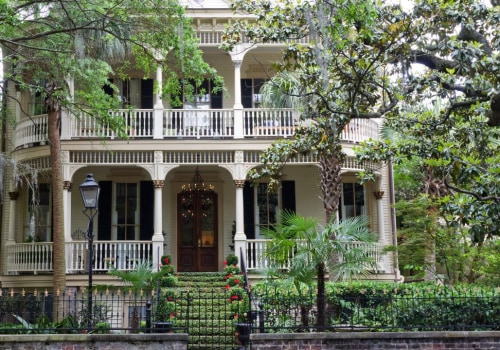
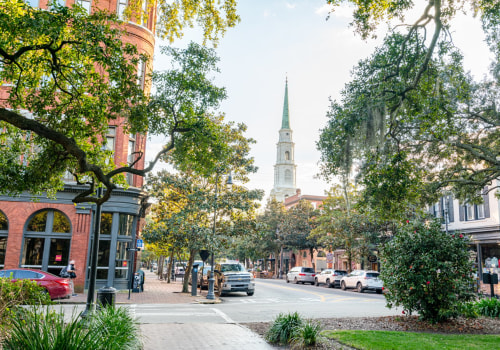
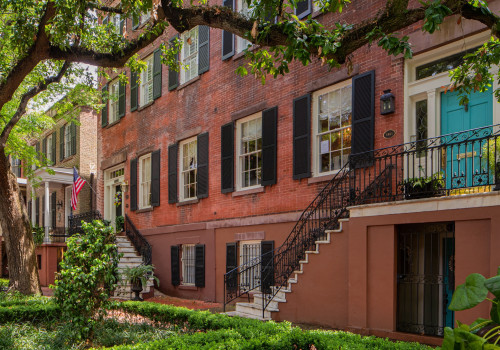
The environment shapes the challenges we face, whether it’s managing coastal drainage, preserving historic homes, or supporting the needs of a growing community. But for many homeowners with ties to other regions, or neighbors relocating from the Midwest, those environmental challenges can look very different.
What affects a home in Savannah isn’t the same as what shapes one in Northeast Ohio. And understanding those differences isn’t just helpful, it’s practical. It gives homeowners a clearer picture of how their homes respond to the world around them, and how small issues can signal larger ones beneath the surface.
In places like Strongsville, Parma, and Cleveland, homes are shaped not by constant humidity, but by movement: slow, seasonal, and persistent.
How Environment Shapes Home Performance
Every home reflects its environment over time. In Savannah, the focus is often on moisture control—protecting materials from humidity, salt air, and long-term exposure. Wood expands, metal corrodes, and organic materials face constant pressure from the elements.
In Northeast Ohio, the forces are different but just as impactful. The defining factor is the freeze-thaw cycle. Water enters small cracks in concrete, freezes, expands, and then thaws again. Repeated season after season, that cycle gradually shifts the very surfaces a home depends on.
The result is not always immediate. More often, it reveals itself slowly—in ways that are easy to overlook.
Two Regions, Two Very Different Challenges
Looking at these environments side by side highlights just how differently homes can behave:
In Savannah and Coastal Areas:
Moisture and salt air gradually wear down materials
Wood framing and doors expand and contract with humidity
Termites and organic decay threaten structural integrity
Doors may stick due to swelling materials and shifting frames
In Northeast Ohio Communities like Strongsville, Parma, and Cleveland:
Freeze-thaw cycles create pressure within concrete surfaces
Soil movement causes slabs and foundations to shift over time
Repeated expansion and contraction stress structural alignment
Doors may become misaligned as the foundation subtly “heaves”
In both cases, the symptoms can look similar—a door that sticks, a system that feels off—but the cause is entirely different.
When the System Isn’t the Problem
This is where experience matters.
What appears to be a mechanical issue is often a structural one in disguise. Garage doors, in particular, are highly sensitive to alignment. They depend on a consistent, square opening to function properly, and when that opening shifts, even slightly, the system begins to compensate.
Maxim Geht, owner of Ohio Garage Door Repair, has built his business around identifying these kinds of issues across Northeast Ohio.
“In places like Parma or Strongsville, a garage door isn’t just a moving part, it’s a structural sensor,” he explains. “When the ground shifts from freeze-thaw cycles, the door is usually the first thing to reflect that change. We see it all the time where a sticking door isn’t a mechanical failure at all, it’s the system reacting to a foundation that’s no longer square.”
That insight reframes the problem. Instead of replacing parts, the focus shifts to understanding what changed and why.
Vocational Service in Action
In Rotary, we often talk about the value of Vocational Service, using our professional knowledge to benefit others in meaningful ways.
In the home maintenance world, that can be as simple, and as important, as telling the truth.
The Four-Way Test asks, “Is it the truth?” When a homeowner is facing a garage door issue, the easy answer might be to replace a motor, adjust a track, or recommend a quick fix. But the more honest answer may be that the problem begins beneath the system itself.
Professionals like Maxim Geht embody that principle by looking beyond the immediate symptom to identify the root cause. That approach not only leads to better solutions, but it builds trust, something that matters just as much in business as it does in service.
A Practical Approach to Regional Maintenance
Whether in Savannah or Northeast Ohio, the most effective maintenance strategy begins with awareness.
In coastal environments, that means watching for moisture-related wear, checking seals, monitoring wood expansion, and protecting against corrosion. In colder climates, it means paying close attention to concrete surfaces, foundation shifts, and the subtle signs of structural movement.
In both cases, the early indicators are often the same: a door that behaves differently, a surface that changes over time, or a system that no longer feels quite right.
Recognizing those signs early is what allows homeowners to respond before small issues become larger ones.
A Shared Responsibility Across Regions
At first glance, homes in Savannah and Northeast Ohio may seem to have little in common. But at their core, they face the same reality: every home is shaped by its environment, and every homeowner benefits from understanding that relationship.
Whether maintaining a historic property along the coast or a family home in a Midwest suburb, the goal remains the same—care, awareness, and a commitment to doing things the right way.
Because in the end, good maintenance isn’t just about fixing what’s broken.
It’s about understanding why it happened in the first place, and using that knowledge to serve others better.